

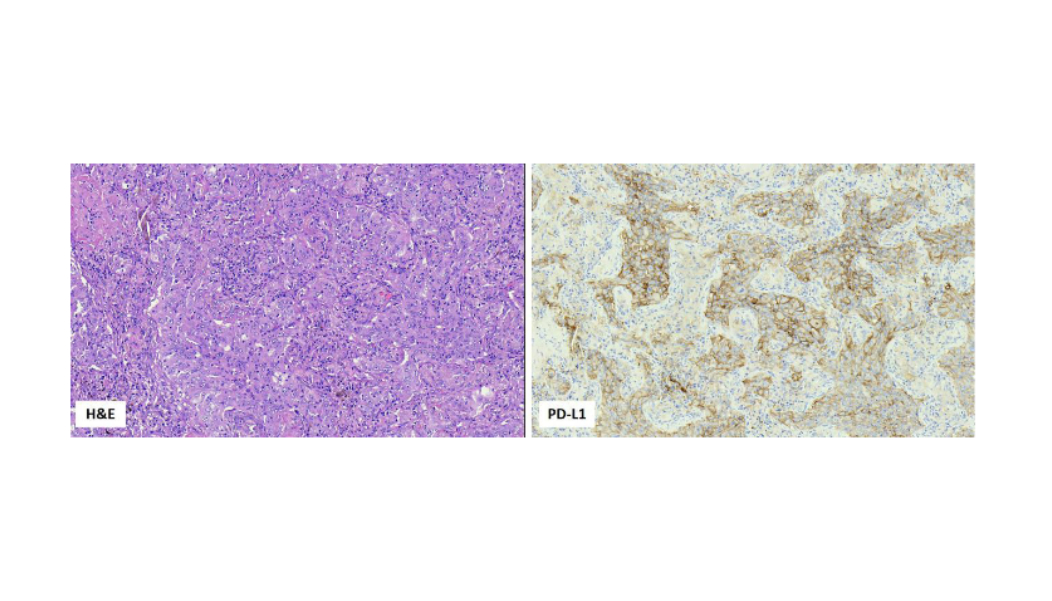
New review on predictive IHCs in NSCLC published in Biomolecules and Biomedicine
Jul 29, 2026
Members of the Reference Medicine team collaborated on a review of uses for predictive IHCs in NSCLC.
Predictive immunohistochemistry in non-small cell lung cancer – Biomarkers, companion diagnostics, and molecular testing: A narrative review
Semir Vranić, College of Medicine, QU Health, Qatar University, Doha, Qatar
- Inga Rose, Reference Medicine, Phoenix, Arizona, United States of America
- Nataliya Kuzmova, Reference Medicine, Phoenix, Arizona, United States of America
- Zoran Gatalica, Reference Medicine, Phoenix, Arizona, United States of America
Abstract
Immunohistochemistry (IHC) is central to precision oncology in advanced non-small cell lung cancer (NSCLC), although its predictive value and the need for molecular confirmation differ across biomarkers. This narrative review aimed to summarize the clinical utility, validated assays, scoring systems, diagnostic performance, and testing algorithms for predictive IHC biomarkers in NSCLC. Recent guidelines, regulatory documents, and selected analytical and clinical studies were reviewed for programmed death-ligand 1 (PD-L1), anaplastic lymphoma kinase (ALK), ROS proto-oncogene 1 receptor tyrosine kinase (ROS1), mesenchymal–epithelial transition factor receptor (c-Met), B-Raf proto-oncogene serine/threonine kinase V600E (BRAF V600E), pan-tropomyosin receptor kinase (pan-TRK), human epidermal growth factor receptor 2 (HER2), and epidermal growth factor receptor (EGFR). PD-L1 and ALK are established IHC-based predictive assays, although PD-L1 interpretation remains assay-, platform-, and cutoff-specific. VENTANA ALK D5F3 and VENTANA MET SP44 RxDx are clinically validated companion diagnostics, whereas HER2 IHC score 3+ may support eligibility for trastuzumab deruxtecan in the tumor-agnostic setting. ROS1, BRAF V600E, pan-TRK, and non-companion-diagnostic c-Met or HER2 assays are best used for screening or triage and generally require molecular confirmation. EGFR mutation-specific IHC is not recommended because of insufficient diagnostic performance. Overall, IHC enables rapid, tissue-sparing biomarker assessment but should be integrated with broad genomic and transcriptomic next-generation sequencing (NGS), particularly when alteration-specific findings are negative, equivocal, or discordant.


