

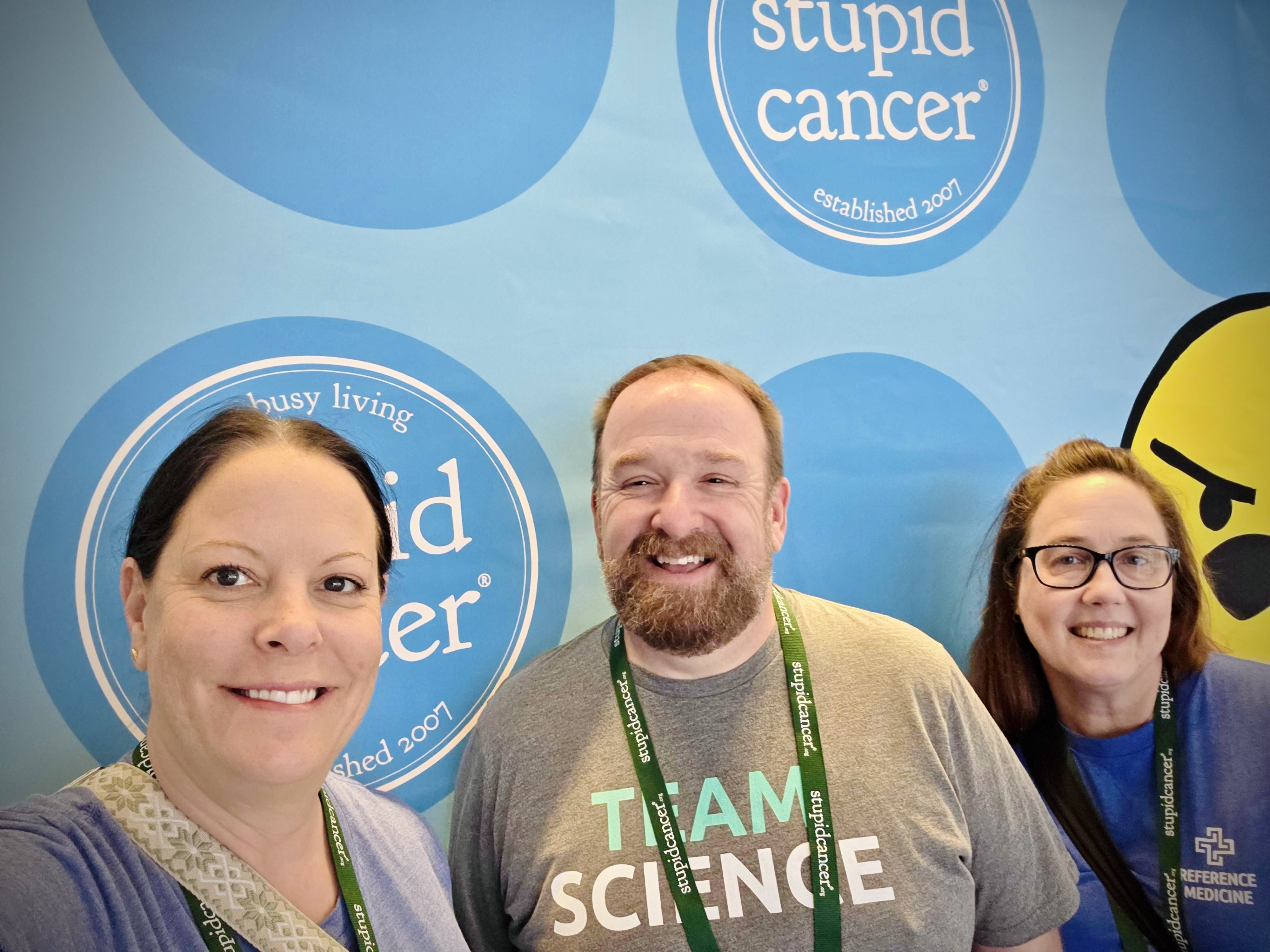
More Than a Sample: What CancerCon Taught Us About Listening to Patients
May 27, 2026
Cancer changes the way people move through the world, and for many young adults, it can create a deep sense of isolation at the exact moment when connection matters most. That reality came into focus during our time at CancerCon, an event created by Stupid Cancer for adolescents and young adults navigating cancer.
We attended CancerCon with a simple goal: to listen, learn, and better understand the lived experiences of people navigating cancer.
Our team - including Aaron Schlum, Jonathan Roy, and Leslie Battaglia - expected to have a meaningful professional experience, but the event became less about what we do as a company and more about the people at the center of why we do what we do.
Jonathan admitted that before arriving, he felt some apprehension. He expected the experience to feel emotionally heavy, and in many ways it was emotional, but not in the way he anticipated. “What surprised me most was the positivity,” he shared. “Watching these young people connect with each other, support each other, and build friendships was incredible.”
Throughout the weekend, we watched complete strangers become sources of comfort and encouragement for one another. Conversations that started at a booth or during a session continued late into the night at pajama parties, outings, and social events designed to bring people together. By the end of the conference, it felt clear that many of those relationships would continue long after CancerCon ended.
Aaron described seeing people slowly let their guard down over the course of the event. One attendee approached our booth wearing a wig during the first day of the conference and by the final day felt comfortable enough to remove it completely while surrounded by people who understood her experience. During a plenary session, a survivor who always wore a hat due to surgical scars, removed it in front of the audience while the room erupted in applause and support.
Those moments stayed with us because they reflected something bigger than courage. They reflected trust, safety, and belonging.
CancerCon created an environment where people felt seen in every part of their experience, including the complicated and vulnerable parts that are often difficult to explain to anyone outside the cancer community. That kind of connection matters deeply, especially for young adults who are still learning how to “do life” while also navigating diagnosis, treatment, recovery, and uncertainty.
For Leslie, the experience created a powerful bridge between her work in quality and laboratory operations and the people ultimately impacted by that work.
“In the lab, you see samples every day,” she said. “But being there reminded me there’s a person behind every one of them.”
That perspective became one of the most meaningful takeaways for all of us. In research and diagnostics, it can become easy to focus on timelines, shipments, specimens, and processes because those things are essential to the work. CancerCon reminded us that every sample represents a person hoping for answers, progress, or a better future for someone else facing cancer down the road.
Jonathan put it best when he said he believes everyone in our company should attend a CancerCon at least once. Because once you sit across from someone sharing their story, once you watch friendships form between people carrying unimaginable challenges, once you hear survivors talk openly about fear, resilience, trauma, humor, and hope, the work feels personal, urgent, and emphatically human.
After a truly inspirational experience, we carried home a renewed sense of responsibility.
At Reference Medicine, we support oncology research through biospecimens, diagnostics, and partnerships that help move science forward. CancerCon reminded us that progress means something far greater than operational success or scientific advancement alone. Progress means building a healthcare ecosystem that stays connected to the people at the heart of every discovery: patients.


